Customer Journey Design Case Study: Clasado Bimuno

Closing the acquisition gap for a science-led supplement brand.

A structured 7-day trial mechanic and a behaviour-matched email sequence increased trial-to-purchase conversion by 70% and grew recurring subscriptions by 150% over two years.

Clasado Bimuno  ·  London, UK
Head of Design & Creative Director  ·  Pomegranate Media  ·  2015–2017

Clasado Biosciences is the UK-based company behind Bimuno, a prebiotic dietary supplement with a clinical evidence base built over a decade of peer-reviewed research. By 2013, the brand had established genuine scientific credibility, with published trials supporting the product's efficacy for digestive health and immune function.

The commercial challenge was not the science. It was the gap between what the research proved and what customers understood about it at the moment of first purchase. The UK supplement market was moving fast, driven by lifestyle brands with emotional messaging and low price-points. Bimuno's clinical positioning was a genuine differentiator, but it required customers to trust a mechanism they could not see over a timeline that demanded patience. The trial experience had not been designed to earn that trust.

Validated
N

Need

Gut health was a real, growing consumer concern backed by clinical evidence. The demand signal was clear and the market was expanding.

Misaligned
S

Solution

The trial experience around the product was passive and unstructured. Users were left to self-manage a 7-day intake window with no contextual guidance at the moments when they were most likely to drop out. The experience design did not match the rigour of the science.

Fragile
B

Business Architecture

The commercial model depended on a trial-to-subscription mechanic that was not converting. Without a working trial journey, the recurring revenue model had no reliable entry point.

Behavioural observation of the trial cohort revealed a consistent pattern: users who completed the minimum 7-day intake window converted at a disproportionately higher rate than those who dropped out before day four. The drop-off was not caused by product dissatisfaction. It was caused by a lack of contextual guidance at the precise moments when users were most uncertain about whether the product was working. The research replaced one assumption with a concrete observation: that the product would not speak for itself, and that people needed a designed experience to stay inside the timeline long enough for the science to prove itself.

The gap was not in the science. It was in the designed experience between first purchase and first result.

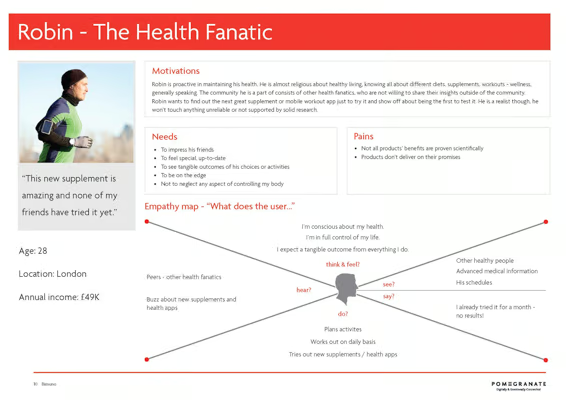
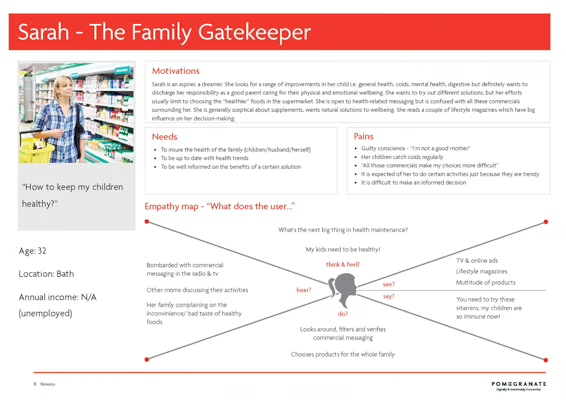
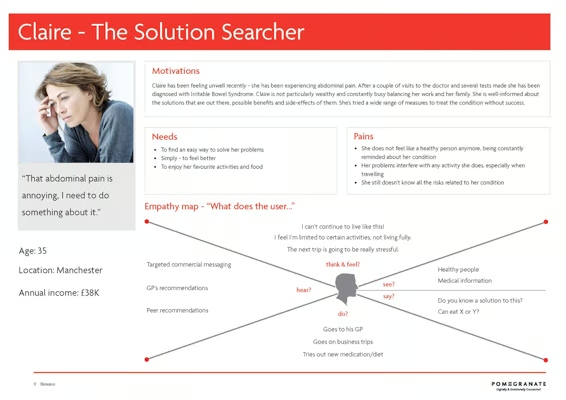
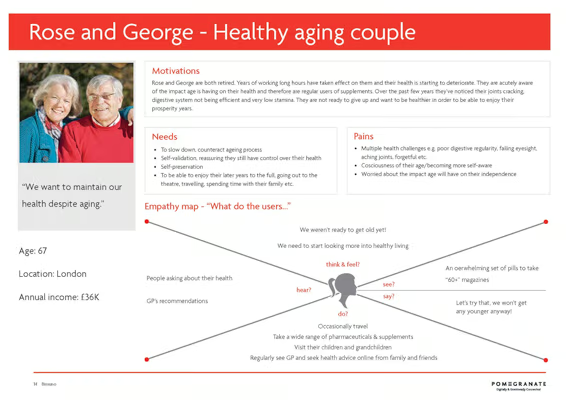
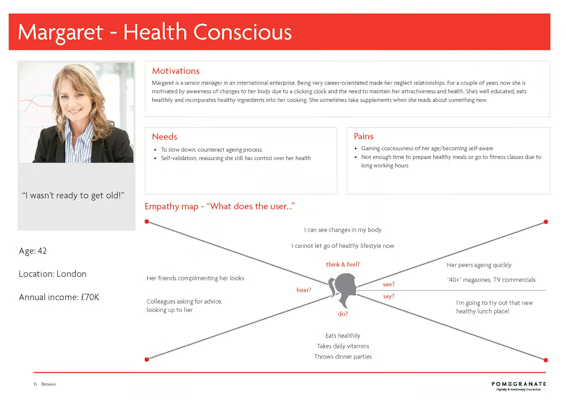
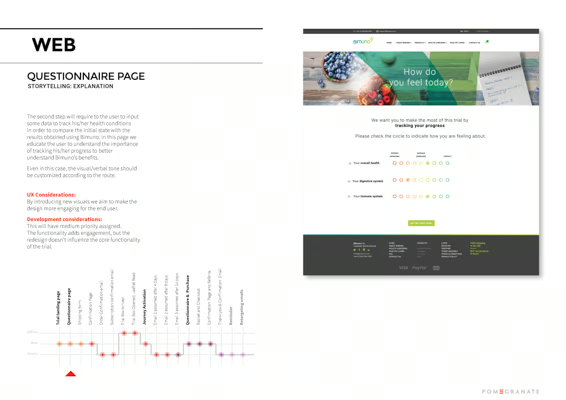
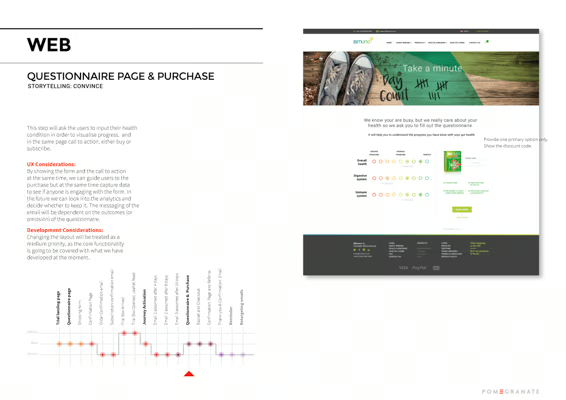
The intervention began with a segmentation exercise. Rather than treating all trial users as a single cohort, I mapped six distinct personas across two axes: scientific literacy and motivational driver. This distinction mattered because the content that builds confidence in a clinically-minded user actively alienates a lifestyle-motivated one. The trial communication had been written for one imaginary average user. It needed to speak to six real ones.

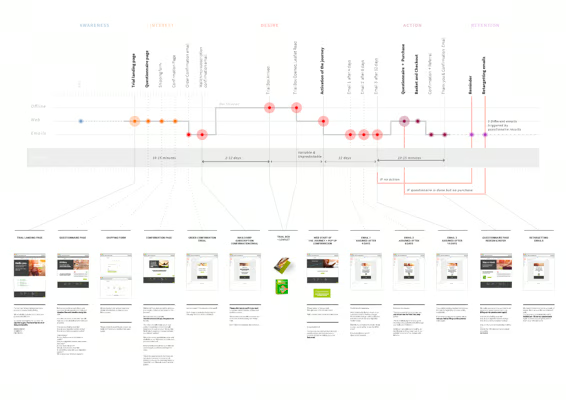
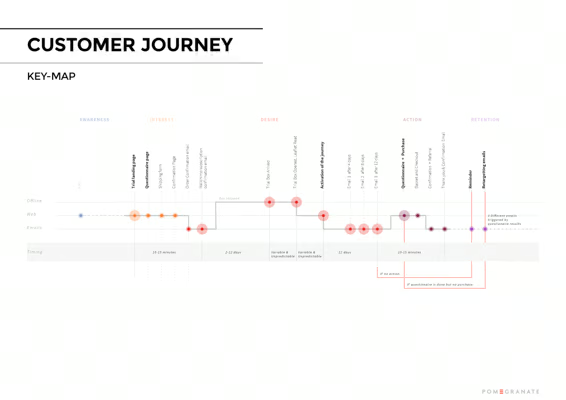
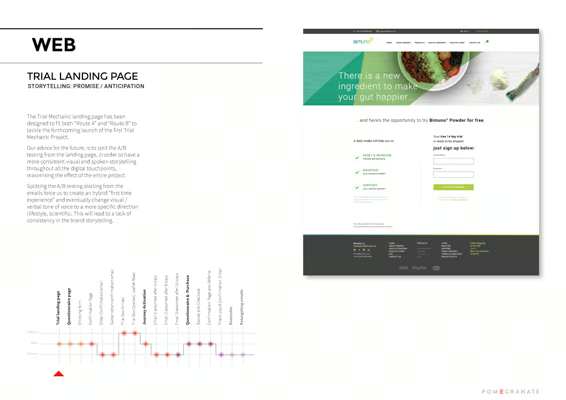
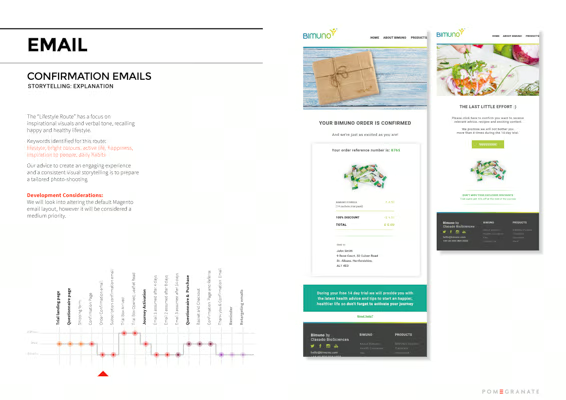
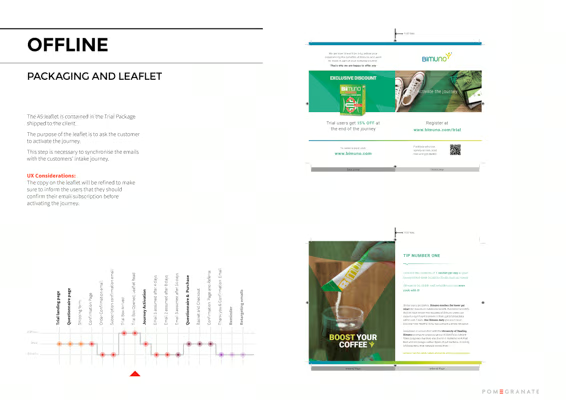
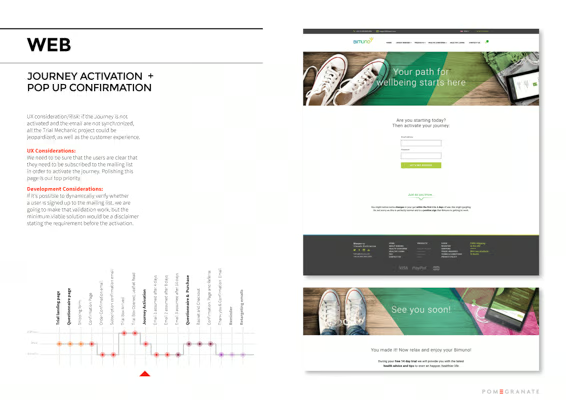
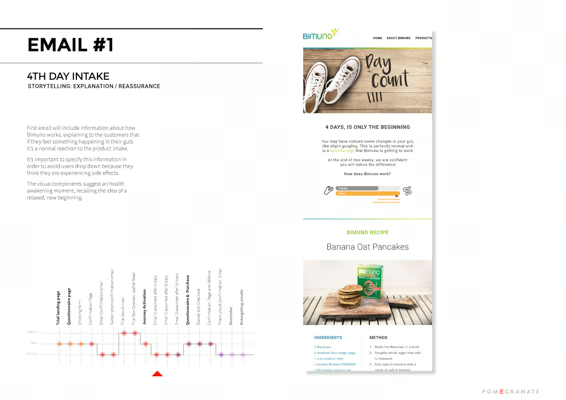
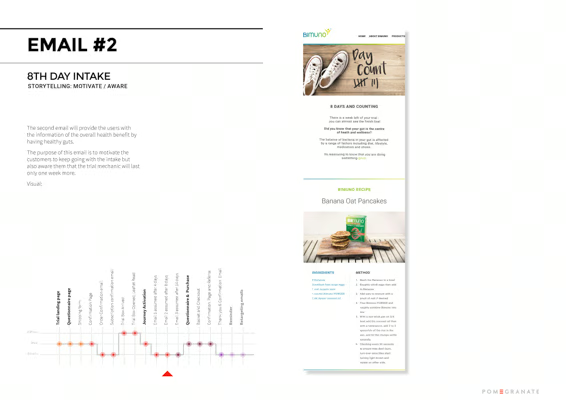
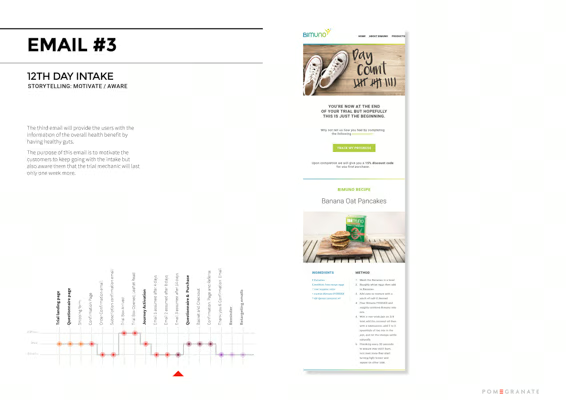
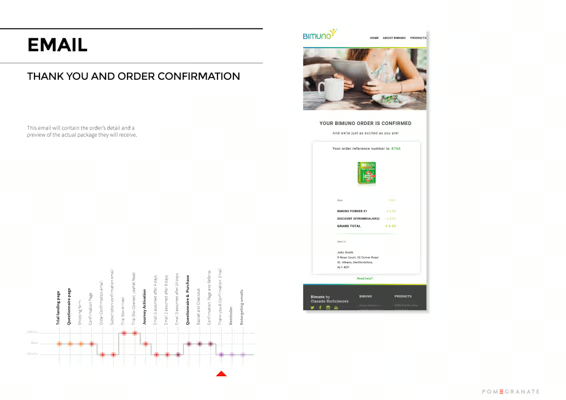
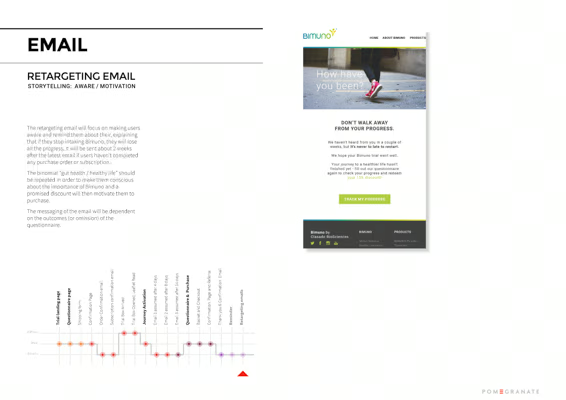
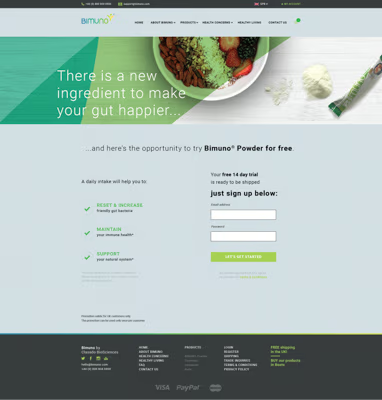
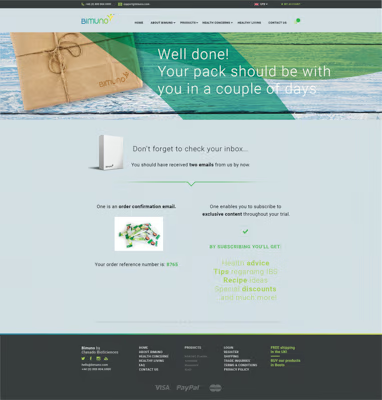
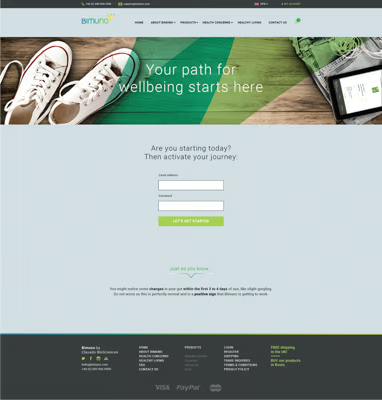
From the personas, I designed a 7-day trial mechanic that mirrored the biological timeline of prebiotic efficacy. Each day of the sequence corresponded to a specific stage of the intake journey, with email content matched to what users were actually experiencing at that moment, not to a generic promotional calendar. The tone shifted from clinical to reassuring in the first 48 hours, when doubt was highest, then returned to evidence-led as the first results window opened. Every message was anchored in the persona, not in the product. The product was the proof; the persona was the audience for that proof.

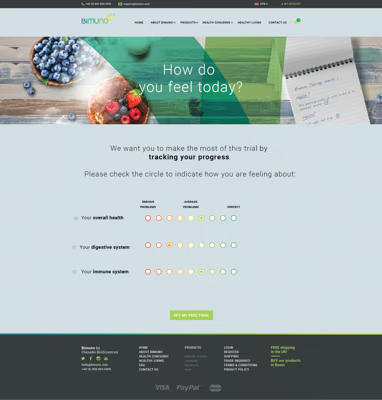
The final layer was a structured feedback loop. Every user who completed the trial received a short two-question prompt: did you notice a change, and would you continue? The response data fed directly back into the segmentation model, sharpening it with each successive cohort. The result was a self-improving acquisition system, not a fixed campaign. The intervention was designed to get better with use, which is the correct commercial logic for a product whose scientific value compounds over time.
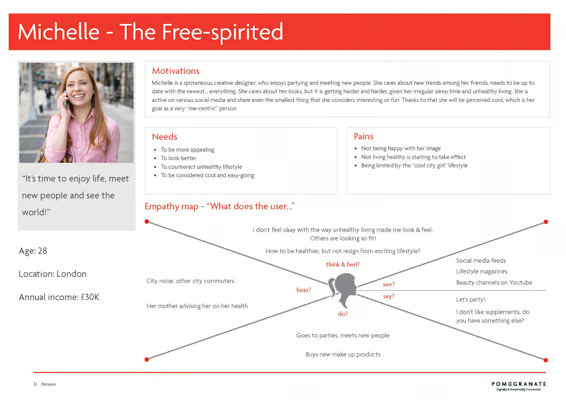
From one undifferentiated trial sequence to a self-improving, persona-matched acquisition system.

+70%

Trial-to-purchase conversion rate

Measured across six trial cohorts · 2014–2016

+150%

Growth in recurring subscriptions

Year-on-year · 2014–2016

-30%

Reduction in churn rate

Measured twelve months post-intervention

6

Validated user personas built and deployed

Foundation for all subsequent content strategy

Does your situation have a gap like this?

The diagnostic is where every engagement begins. A bounded, de-risked initial conversation to map the real state of Need, Solution, and Model.

Start a Conversation